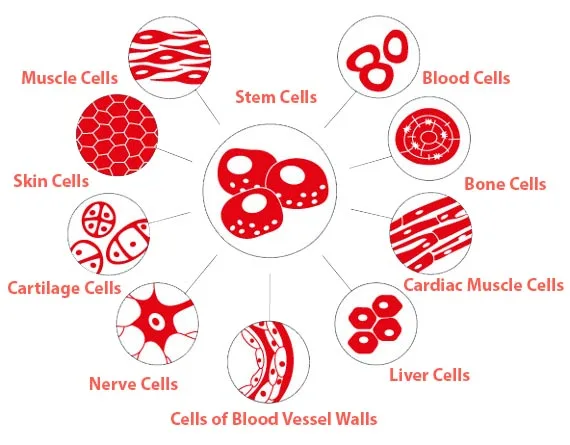
1. Fundamental Properties of Stem Cells
Stem cells are undifferentiated master cells that possess two extraordinary defining characteristics:
- Self-Renewal: The capacity to undergo numerous cycles of cell division while remaining in an unspecialized state.
- Differentiation Potency: The capacity to mature under appropriate biochemical cues into specialized cell types with dedicated physiological functions (e.g. cardiac muscle cells, neurons, cartilage cells, or blood cells).
2. Major Classifications of Therapeutic Stem Cells
Hematopoietic Stem Cells (HSCs)
Found predominantly in the bone marrow and umbilical cord blood. HSCs are blood-forming cells that give rise to erythrocytes (red blood cells), leukocytes (white blood cells), and platelets. They represent the established medical standard for bone marrow transplants in hematological malignancies.
Mesenchymal Stem Cells (MSCs)
Multipotent stromal cells derived from bone marrow, adipose tissue, or umbilical cord Wharton's Jelly. MSCs can differentiate into osteoblasts (bone), chondrocytes (cartilage), myocytes (muscle), and adipocytes (fat), while secreting powerful anti-inflammatory cytokines.
3. Crucial Biological Capabilities
When administered therapeutically, adult and cord-derived stem cells exhibit three vital physiological behaviors:
- Cellular Homing: The biological phenomenon wherein intravenously or locally delivered stem cells migrate specifically toward sites of inflammation, tissue hypoxia, and cellular distress in response to chemokine signals (such as SDF-1/CXCR4 axis).
- Paracrine Signaling: Rather than solely engrafting, stem cells act as biological factories, releasing extracellular vesicles (exosomes), growth factors (VEGF, HGF, IGF-1), and neurotrophins that awaken endogenous repair mechanisms.
- Immune Privilege: Mesenchymal stem cells lack significant MHC Class II surface antigens, allowing tested donor allogeneic cells to be administered without severe graft-versus-host immune reactions.
4. Clinical Sourcing Standards in India
Under the National Guidelines for Stem Cell Research issued by the ICMR and DBT, embryonic stem cell therapy remains heavily restricted, whereas adult autologous stem cells and ethically procured donor umbilical cord mesenchymal stem cells are permissible within approved clinical trial and institutional committee frameworks.
Partner laboratories in New Delhi, Mumbai, and Bangalore operate in ISO Class 5 / Class 7 cleanrooms adhering to strict cGMP (current Good Manufacturing Practice) guidelines to guarantee viability, phenotypic purity, and complete sterility.